










Medicolegal Aspects of Death in the Operation Theatre

October 07, 2026
Medicolegal Aspects of Death in the Operation Theatre
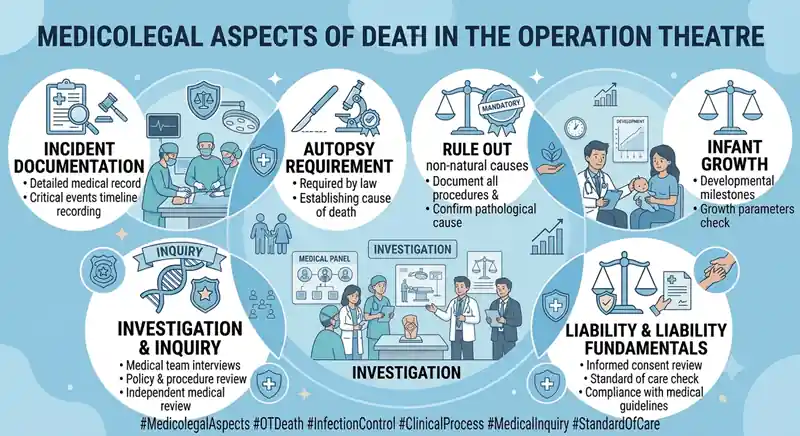
When death occurs in an operating room during a routine procedure, it is a significant event that carries medical and legal implications that must be dealt with appropriately, as it requires proper clinical management, accurate documentation, preserving evidence, and communicating with the patient’s relatives. While death occurring during surgery or immediately after could be due to an existing disease, surgical complications, or even unaccounted internal changes take place, each case of this kind must be dealt with properly.
Much more attention must be paid to medicolegal issues in situations when the cause of death is unexpected, suspicious, traumatic, or can be associated with medical treatment. The situation can be classified as an unexpected death after a safe and simple operation.
When Does a Death Become Medicolegal?
A medicolegal review may be necessary regarding a death in instances where there are no clear indications as to the cause or if there are questions of the death being either accidental, suspicious, or if it could have been avoided. Some instances where the death becomes medico-legal are mentioned below.
- Death caused by situations related to anesthesia during the procedure.
- Death resulting from trauma or an accident.
- Suspected poisoning or drug-related incident.
- Death in cases of medical malpractice.
- Death with a cause that remains unexplained after researching clinical signs.
- Death occurring unusually or suspiciously.
Informed Consent and Its Medicolegal Significance
Informed consent is crucial when it comes to the perioperative process. It usually involves informing the patient about the nature of the intervention to be performed, risks related to the procedure, likelihood and possibility of complications, as well as alternatives.
However, taking consent does not mean that the doctor is absolved of liability in case of negligent provision of care. While obtaining consent demonstrates that the patient agreed to the procedure, it does not give a doctor a right to practice subpar treatment.
The adequacy of consent is particularly important in situations where there is an unexpected complication, or the patient dies, and it appears necessary to investigate whether the patient or their family was adequately informed of the risks of conducting the procedure.
Preservation of Medical Evidence
In cases where a death is of potential medico-legal concern, the available documents and materials should always be preserved according to applicable laws and rules of India. Medical equipment or devices believed to have caused an adverse event must be carefully handled or replaced. Proper preservation and documentation plays an important role in the investigation process. The evidentiary documents include the following:
- Medical Records
- Patient’s medical history
- Drug and medication prescriptions
- Samples collected during medical treatment
- Mental health records
- Laboratory Reports
Medical Negligence and Intraoperative Death
An intraoperative death should not, on its own, be considered evidence of medical negligence. Both surgery and anesthesia entail certain risks, and negative outcomes may still occur even if medical care was provided in an appropriate manner. When making claims of negligence, the following questions are relevant.
- Did the medical practitioner owe a duty of care?
- Was the applicable standard of care breached?
- Was the breach responsible for or contributed to the injury or death?
All three questions shall be answered in the positive to hold a medical institution or specific doctor liable for the conduct during the medical treatment. Furthermore, to answer all the above questions, the below-mentioned factors shall be given weightage
- Was the necessary preoperative evaluation conducted?
- Was the surgery justified?
- Was the surgery properly monitored?
- Were complications recognized promptly?
- Were the treatment measures properly applied?
- Were drugs and equipment used properly?
- Was appropriate documentation prepared?
- Was the appropriate standard of care achieved in the given circumstances?
Importance of Maintaining the Chain of Evidence
When considering the cases of unexpected or possibly medicolegal deaths occurring during surgery. Preserving the chain of evidence is necessary to ensure that the medical records, devices, drugs, samples, and other materials are reliable for further research. The chain of evidence tells how the evidence was identified, collected, and handled, and who was responsible for every stage of the investigation process.
Professional healthcare workers must not change, dispose of, replace, or interfere with any material relevant to the investigation. The relevant documentation, anesthesia records, prescriptions, monitoring records, medical equipment used, samples, dispatched and other materials must be preserved according to legal requirements. Proper chain of evidence will give much credit to the whole investigation.
Conclusion
The occurrence of death in the operating room is a serious incident that demands not only urgent medical attention but also scrupulous adherence to legal and ethical regulations. The particulars regarding the cause of death must be recorded, sufficient evidence must be kept intact, and the proper authorities must be notified whenever required.
Importantly, intraoperative death cannot automatically be treated as proof of malpractice. Establishing responsibility for intraoperative death necessitates a thorough investigation of the patient’s health condition, the kind of surgical procedure performed, the quality of care received, complications incurred, and the link between the violation and the result.
With regard to operating room and anesthesia professionals, knowledge of documentation, preservation of evidence, patient consent, reporting, and professional rules is critical to safe professional practice. A systematic medicolegal approach guarantees that investigations are conducted in a fair manner while achieving patient safety, accountability of specialists in healthcare, and public trust in medical services.
Start Your Career in Operation Theatre Technology with DPMI Vocational Institute
DPMI Vocational Institute is highly reputed for securing the top spot in the field of offering industry-focused education and practical training that shapes the students for the actual world in the healthcare and diagnostic industry. DPMI Vocational Institute provides excellent quality education and practical skill-based exposure for students pursuing a paramedical degree or diploma course.DPMI Vocational Institute is one of the most recommended names among people who aim to pursue a career and those who have established their practice in the field of hospitality and medicine. Enroll Today!