








Disaster Management Nursing: Phases, Roles & Responsibilities of Nurses

October 21, 2026
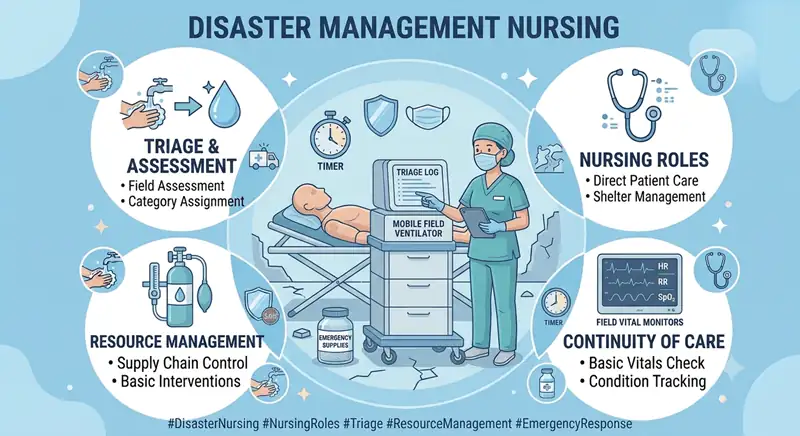
Disaster Management Nursing
Emergencies can strike at any time and create immense demands on health care facilities, first responders, and the affected population. Disasters can either be of natural origin (earthquakes, floods, tornadoes, etc.) or be self-induced. For example, industrial incidents; in either case, these events can cause injuries, displacement, and the need for medical assistance. Nurses play a crucial role in providing emergency assistance in the tasks of planning and organizing medical services and victim aid.
What Is Disaster Management Nursing?
Disaster management nursing is a process of applying nursing knowledge for the prevention and response in case of disasters. Disaster management nursing covers much more than just giving medical aid to injured people in the aftermath of any adverse situation. The tasks of nurses may actually include preparation for disasters, emergency response, triage, patient care, and rehabilitation.
Disaster management nursing is a branch of nursing that deals with the provision of care to victims of disasters, both natural and man-made.
In contrast to routine clinical practice, disaster situations often happen to be a result of limited resources, a significant number of patients, and dynamic situations that develop very fast. This is why nurses often need to perform a triage of their patients and prioritize their care without compromising safety. Disaster nursing is beyond merely responding in emergencies because it covers the whole cycle of disaster preparedness, recovery, and rehabilitation.
Why Is Disaster Management Nursing Important?
When a disaster strikes, hospitals and medical institutions often face concern of increasing number of patients along with shortage of staff, medical supplies, and beds. Nurses often find themselves among those medical employees who are directly involved in the process of treating patients in such difficult times.
Good disaster nursing involves proper use of available medical resources, timely help for those who require urgent treatment or are facing life-threatening diseases; helps to prevent infection spread; maintains proper documentation; communicates with patients and their families; conducts health teaching in emergencies.
Phases of Disaster Management Nursing
Disaster management is understood as a process aimed at mitigation, preparedness, response, and recovery. Nurses have several responsibilities in disaster management, which include healthcare assessment, preparedness, response, and recovery. Nurses actively participate in risk identification and mitigation in the mitigation phase. They engage in emergency planning, training, drills, building stocks of supplies, and educating communities.
The response phase starts after a disaster takes place and focuses on providing emergency care. The recovery period is longer and includes assisting victims with rehabilitation, psychological care, and restoring necessary health services. Understanding these different phases in disaster management gives nurses insight into the complexity of responsibilities in disaster care and rescue.
Role of Nurses in Disaster Preparedness
Preparedness is an essential stage in disaster management. Nurses may play a role in developing emergency plans, conducting simulations of disaster cases, and determining what resources are needed for different emergencies. They can also undergo training in first-aid, basic lifesaving techniques, triaging, and infection control.
Nurses participate in emergency awareness activities, including promoting knowledge of emergency kits, first aid, and evacuation advice. In hospitals, they may check on the availability of medication, special equipment, and protective materials that should be in stock.
Infection Prevention and Control
The prevention of infections is very important in case of accidents when there are crowded shelters, the provision of sanitary services is interrupted, water is polluted, or temporary medical stations are established. All these circumstances increase the possibility of spreading infections.
Nurses deal with the prevention of infections by performing proper hand hygiene, applying personal protective equipment where necessary, using proper waste-disposal techniques, and following the rules of infection control. It is also possible for them to educate the affected population about hygiene, drinking water, sanitation, etc.
Psychological Support During Disasters
The consequences of disasters are not only physical injuries. In addition to physical suffering, victims can suffer emotionally. Thus, people may feel afraid, sad, anxious, confused, etc.
Nurses are often the first medical specialists to communicate with the victims and provide comforting communication, assurances, and basic support. They can also detect those people who require additional support and counselling.
Having a calm and courteous attitude is an essential part of dealing with patients and their families when they are dealing with uncertainty and huge emotional pressure.
Importance of Disaster Nursing Education and Training
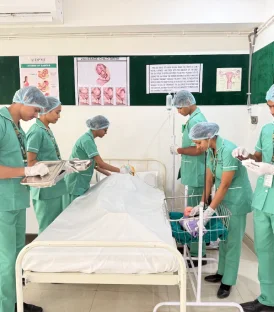
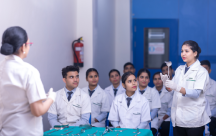
Disaster preparedness cannot be based only on the lessons learned from actual disasters. Regular training, simulations, and disaster training drills enable nursing students and practitioners to hone their skills in a safe environment.
Training can enable nurses to understand emergency procedures, practice triage, and become confident in working in mass casualty situations. It also gives healthcare facilities a chance to identify weaknesses in their emergency strategy and improve the coordination of various services and departments.
Learning about disaster management enables nursing students to understand the scope of utilizing their clinical skills outside of a conventional hospital environment and in wider public health disasters.
Conclusion
Disaster management nursing is a crucial field within healthcare, combining elements of clinical care with emergency preparedness, public health, and community support functions. Nurses participate in all stages of the disaster-management cycle, from preparedness and risk reduction to emergency response, recovery and rehabilitation.
In addition to triage and emergency care, nurses can provide a number of services during the time of disaster, including: infection prevention, psychological support, patient education, and coordination of work in multidisciplinary teams. When nurses are adequately trained and organized, they can effectively help society in an emergency situation.
Build Your Nursing Career with DPMI Vocational Institute
Students who have figured out that their academic and professional interests lie in areas such as paramedics, patient care, paying attention to detail, and healthcare operations shall definitely enrol in the nursing course after 12th grade. This course focuses upon building various soft skills and medical qualities throughout the tenure of pursuing the nursing course.
Applying for a nursing course in Delhi NCR is usually an online process. To apply for admission at DPMI School of Nursing, you must have completed your 10th or 12th grade of education. DPMI School of Nursing is one of the bestnursing institutes in Delhi NCR, and it provides all the facilities for the students that are essential for industrial exposure and professional skill development programs. Enroll Today to build a great career ahead!