








Importance of Handwashing in Infection Control: Technique & Best Practice

October 14, 2026
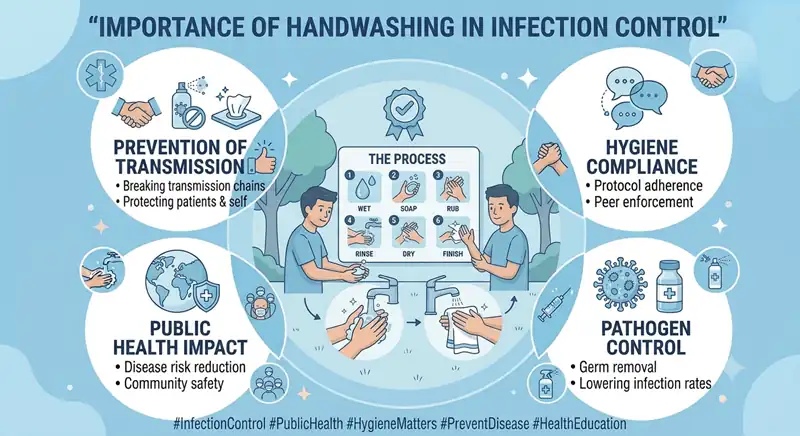
Importance of Handwashing in Infection Control
The act of washing hands is a very effective way to avoid getting sick. Our hands touch different surfaces, people, equipment, food, and much more every day. In a hospital, this becomes important for the people who are ill and whose immunity is compromised. When hands are washed frequently and properly, it helps to prevent the spread of germs, which is key step in keeping the environment in a health care facility safe.
What Does One Understand By Handwashing?
The term handwashing means cleaning the hands with soap and water to get rid of dirt, bacteria, and other harmful elements. Although proper handwashing can be considered an easy practice, the success of handwashing depends on proper technique and attention to the hands.
Using soap is important for proper handwashing. However, it must be combined with running water and the required rubbing of hands, as this technique will help get rid of germs. If neither soap nor water is available, it is possible to use a special alcohol-based disinfectant to get rid of the bacteria on the hands.
Why Is Handwashing Important in Infection Control?
Hands are an important channel for the transmission of pathogens from person to person and from surfaces to people. A person’s hands can transmit microorganisms from transmission to their eyes, nose, mouth, food, or from one person to another. This can happen irrespective of whether the hands are visibly dirty or not.
The need for proper hand hygiene becomes even more urgent in healthcare institutions. This is because in hospitals, medical staff move around patients, medical equipments, and areas of the establishment. In that case, pathogens can be transferred directly from one patient to another or through contaminated surfaces.
Role of Handwashing in Healthcare Settings
Health care-associated infections are, by definition, those acquired while giving and receiving health care. Therefore, adequate hand hygiene is one of the most critical infection prevention measures in hospitals, medical centres and laboratories.
Healthcare professionals who provide care can be in contact with body fluids, wounds, respiratory secretions, medical instruments, and contaminated items. Regular washing or disinfecting hands at the right time ensures that microorganisms are not transferred between patients and different parts of the health care establishment.
Proper Handwashing Technique
Hand hygiene is vital beyond its application by medical doctors and nurses. Paramedical staff, lab workers, technologists, caretakers, cleaning personnel, and many other people dealing with patients and medical equipment should practice hand hygiene. The collective compliance among the medical team is equally important for the success of infection control in the hospital.
Effective washing of hands does not mean quickly rinsing them with water. The technique comprises first wetting the hands with running water, followed by the use of soap. The soap must be rubbed thoroughly to ensure that it reaches the entire surface of the hands, including palms, backs of the hands, areas between fingers, and areas around nails.
After washing, the hands should be rinsed with fresh water. They should then be dried using a clean towel or one of the approved methods. Washing should not be done quickly, as it can leave pathogens on the hands.
Importance of Hand Hygiene for Healthcare Professionals
For students and professionals in paramedical and allied healthcare professions, hand hygiene is not only a personal habit but an inalienable professional obligation. Medical laboratory technicians, radiology technicians, nursing specialists, emergency care personnel, and other healthcare professionals often work with patients, samples, instruments, and/or infectious substances as part of their duties.
Learning how to implement hand hygiene properly in the course of their education allows Allied Health students to gain insights into the way personal hygiene, patient safety, and infection prevention work together and how the knowledge gained in class can help in their future work in the healthcare system.
Conclusion
Correct handwashing is quite a simple but effective means of infection control. By eliminating microbes from the hands and preventing their transfer to others, hand hygiene can help people, patients, healthcare professionals, and society in general. In addition, the significance of hand hygiene is especially high in the medical sphere, as even minor poor hygiene can cause an epidemic.
Healthcare professionals must be aware of the principles of proper hand hygiene as part of their responsibilities when caring for patients and working with them. Handwashing, along with other infection-control methods, will help create safe working conditions in the healthcare sector and ensure that good healthcare quality standards are complied with.
Train for a Safer, Skilled Healthcare Future with DPMI Vocational Institute
DPMI Vocational Institute is a reputed institution that specialises in the healthcare field. Students can choose multiple niches to pursue; however, the most secure and stable option among students and professionals is the general paramedics course.
DPMI Vocational Institute focuses on overall beneficial learning with the purpose of enhancing the practical skills of the students, coupled with book-based learning. The paramedical course fee at DPMI is highly affordable, opening up a great opportunity to learn for a huge chunk of students across India. Enroll Today for a great learning experience!