








Family as a Unit of Health: Concept, Dimensions & Nursing Approach

October 28, 2026
Family as a Unit of Health
An individual’s health is neither determined merely by his biological condition, nor only on an individual's social environment but on such factors as the condition and arrangements of living, financial situation, behavior, and access to health services. The family is an important part of all the above aspects. Family usually constitutes the most relevant area for a person to acquire health-related habits, receive necessary support, and react to diseases.
That is why family in community public health nursing is considered to be an important element in the assessment of health. In order to understand an individual’s health, it is necessary to have a clear notion of his or her family. Similarly, in some cases, the improvement of health of one family member might be impossible without changes in the knowledge, attitude, and behavior of other family members.
What is the Concept of Family Health?
Family health indicates not only the association of physical, psychological, social, and emotional soundness of family members but the ability of the family as a unit to carry out its basic tasks as well. In that respect, family health implies not only the absence of illnesses of individual family members but also the ability of the family unit to provide a healthy environment for everybody and to deal with any health problems while using available medical services.
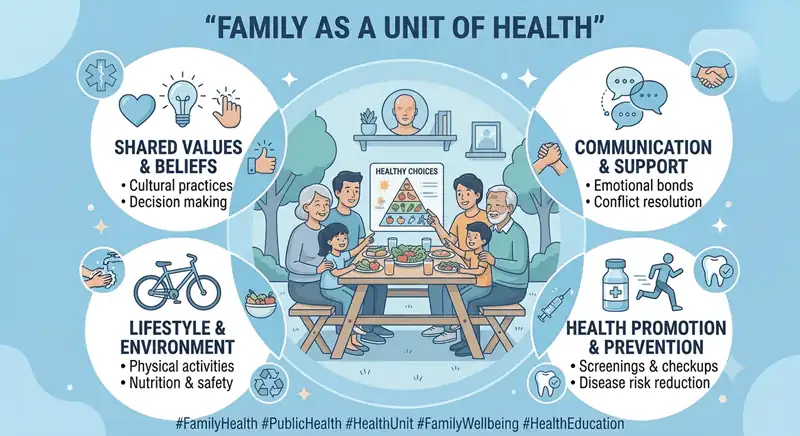
The health condition of the family can depend on such factors as income, housing provision, sanitary conditions and hygiene, nutrition, education, profession of family members, lifestyle, genetics, culture as well as availability of medical services.
Why the Family is Considered a Unit of Health?
The most important place for health improvement and prevention of diseases is the family. A person adopts many habits and attitudes concerning nutrition, hygiene, physical activity, using medical services, and preventing diseases from his or her family.
A health issue of an individual may affect one’s family as a whole in every aspect, including health as a whole. A person’s illness can change the responsibilities of the family, while taking care of sick relatives can put emotional strain on the rest of the family, as those duties might require additional time. Thus, the health of each family member should be monitored, and sometimes, family-related factors can play an important role in the emergence of a disease.
Key Dimensions of Family Health
Family wellness includes many aspects and is not only about there being no diseases in the family. There are many key elements in which families help each other regarding health issues, such as:
- Physical Health and Well-being
The health of family members is affected by the everyday practices occurring in the family. Families play an important role in inculcating habits around proper nutrition, hygiene practices, regular exercise, good sleep, and access to health services. Healthy nutrition patterns, meals, cleanliness, and health prevention practices brought about by the family can drastically reduce risks of getting nutritional deficiencies, illnesses, obesity, and diseases related to unhealthy lifestyles.
- Mental and Emotional Well-being
The psychological and emotional well-being of every family member is one of the key components of family health. Family is often the first provider of comfort when an individual faces problems in the form of stress and illness or when he/she encounters losses, challenges regarding job or school performance. A supportive family with mutual understanding and affection can give a sense of security and belonging to individuals. On the other hand, the negative impact on health may be caused by continuous conflicts in the family and lack of communication, regardless of age.
- Health Education and Awareness
The family is among the first settings in which people learn about health. Parents, guardians, and other members of the family shape how children perceive hygiene, nutrition, exercise, disease prevention, and health-seeking behavior. The health-related knowledge learned in childhood can impact behavior in adult life. Health education at the level of the family should not be limited to basic data. Families have to understand the significance of vaccination, good nutrition, hygiene, and compliance with medical recommendations.
- Disease Prevention and Early Detection
Family members tend to be the first people to detect changes in a person’s health status. High fever, unexplained variations in weight, tiredness, changes in appetite, abnormal behavior, or other indicative symptoms may be noticed first at home. Having family members take proper actions and seek professional medical help can lead to early identification and treatment, influencing health outcomes.
- Care and Support During Illness
During the process of receiving medical care or recuperating from an illness, an individual often seeks the assistance of family members who provide both practical and emotional aid. Family assistance can take many forms, from administering medications to performing everyday tasks for people in need of assistance.
Conclusion
Understanding that family plays a crucial role in healthcare events draws the attention of healthcare workers towards the relationship between family and health. Family health is defined not only by individual health conditions of family members, but also by the overall condition of the family, such as its ability to ensure family members safely cope with illness and take necessary steps in preventing diseases.
Treating family as a unit of health allows healthcare specialists, particularly nurses, to provide a better utilization of their knowledge. A family-centered approach solves health issues of patients while reinforcing the functioning of families as a significant component of health promotion.
Learn, Care and Grow with the DPMI School of Nursing
Choosing the DPMI School of Nursing to pursue a paramedical and nursing course after 12th grade is the key to your career. The quality of teaching offered at the DPMI School of Nursing will shape your ability to advance in your career and ultimately get a good job in the healthcare field. Students shall consider multiple aspects such as accreditation, faculty’s experience, the number of hospitals available for training, internship availability, and infrastructure before choosing the perfect institute for themselves. DPMI School of Nursing combines academic excellence and experience in the healthcare field to allow students to grow and build their career in the right direction.