








Importance of Postnatal Checkups in Maternal and Newborn Care

October 26, 2026
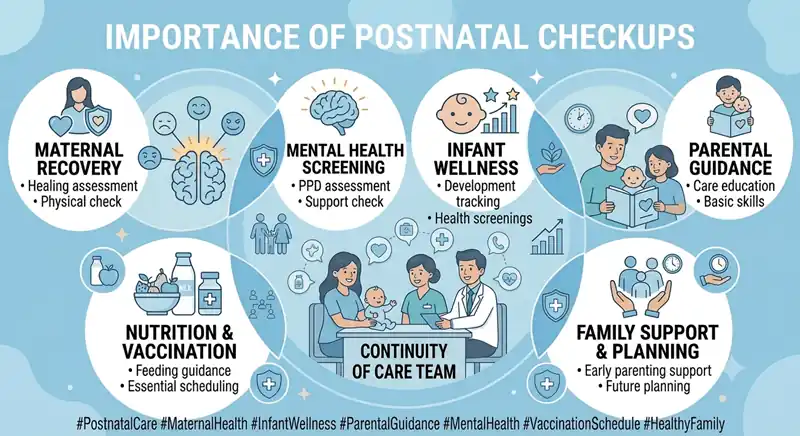
Importance of Postnatal Checkups
The postnatal period, commonly known as the postpartum period, consists of six weeks succeeding child birth and is known as a very important stage in maternal and child healthcare. This period is characterized by considerable changes in physiology, psychology, and development of both mother and newborn, which calls for careful observation and prompt medical help. Apart from ensuring sufficient focus on prenatal care and safe delivery, postnatal care is just as important in minimizing maternal and neonatal morbidity and mortality, as well as ensuring quick recovery of the mother and healthy development of the baby.
The postnatal checkups create a standardized procedure for assessing the health of the mother and baby, discovering possible health problems at an early stage, providing preventive health services, and giving science-based directions about newborn care, breastfeeding, nutrition, maternal care, and family planning. As a result, comprehensive postnatal care is very important for achieving effective health outcomes.
Meaning of Postnatal Checkups
Postnatal checkups include systematic medical evaluations carried out by qualified professionals after childbirth. These appointments aim to evaluate the recovery of the mother from pregnancy and childbirth, as well as the growth of the newborn.
Postnatal care includes more than just physical examinations. It also means preventive services, health education, psychosocial assistance, nutritional advice, breastfeeding help, immunization, and monitoring any complications that can affect the health of the mother or newborn. The frequency of the postnatal visits is defined by the health status of both the mother and the infant.
Essentiality of Postnatal Checkups
Clinical evaluation helps to discover specific health problems in babies, including jaundice, problems with feeding, congenital problems and defects, infections, breathing issues, and metabolism problems at an early stage. Below mentioned are certain key aspects as to why postnatal checkups are highly essential.
- Monitoring Maternal Recovery
After childbirth, several physiological processes start inside the woman’s body until it returns to its pre-pregnancy condition. Postnatal checkups help to monitor the process of uterine involution, wound healing after childbirth, whether through natural delivery or surgery, blood pressure, hemoglobin levels where applicable, and pain management.
During the postnatal checkups, health professionals monitor the onset of other complications associated with delivery such as bleeding, infections, thrombosis, urinary issues, and delayed wound healing, because their prompt discovery allows for minimizing long-term threats to women’s health.
- Early Detection of Postpartum Complications
Though many women can recuperate successfully without serious consequences, the postpartum period is still fraught with major health risks. Some life-threatening conditions, such as excessive bleeding, hypertension, infections, and heart diseases, may develop after being discharged from the hospital.
Periodic check-ups after childbirth are of great benefit to health care specialists as they can find out any warning clinical signs before they develop into complications. Quick diagnosis of postpartum disease together with prompt consideration helps save the lives of mothers and reduce the rate of avoidable maternal death.
- Assessment of Maternal Mental Health
Psychological health is a vital part of postpartum treatment. The hormonal changes, lack of sleep, physical recovery, and newborn responsibilities can impact the state of emotional health in the postpartum period
Systematic diagnostics of postpartum depression, anxiety, and other mental illnesses is an important aspect of postnatal consultation. With the help of psychological assessment, physicians can provide valuable advice as well as refer mothers for further treatment if necessary.
- Promotion of Infant Nutrition
Breastfeeding provides the best nutrition for infants and offers protective benefits for mothers as well. Yet, efficient breastfeeding often requires the assistance of health care professionals in the first few weeks after childbirth.
Post-natal checkups serve as important resources that aim to assess aspects such as breastfeeding methods, baby’s position, milk flow, woman’s comfort, as well as the adequacy of feeding the newborn. Healthcare specialists deal with problems such as wrong latch, nipple injury, breast hardening, mastitis, difficulties with producing enough milk, etc.
- Monitoring Neonatal Growth and Development
Post-natal checkups assist in supervising the whole baby’s life from the very beginning of life, which helps to monitor the baby’s growth and feeding process.
The process of healthy mothers’ and newborn babies’ evaluation helps medical professionals to analyse the possible problems in newborns, such as jaundice, feeding problems, congenital defects, infections, and so on.
Conclusion
Postnatal examinations are considered an important part of maternal and neonatal health care. The postnatal examinations play an important role not just in clinical evaluation of the condition of mothers and newborns, but also in the prevention of complications, assistance in mother’s healing processes, as well as breast-feeding, neonatal development monitoring, preventive health care services, and psychosocial aspects in general. The postnatal care ability to provide early medical evaluation, evidence-based counselling, and medical support can significantly diminish maternal and neonatal health issues while helping mothers to better their future state of health and situation in life.
Advance Your Career in Maternal and Child Healthcare with DPMI School of Nursing
DPMI School of Nursing is a reputed institution that specialises in the healthcare field. Students can choose multiple niches to pursue; however, the most secure and stable option among students and professionals is the paramedical and maternal care nursing courses.
Moreover, DPMI School of Nursing focuses on overall beneficial learning with the purpose of enhancing the practical skills of the students, coupled with book-based learning. ANM & GNM courses at DPMI are highly affordable, opening up a great opportunity to learn for a huge chunk of students across India. Enroll Today to gain the best experience!