











The Role of Active Listening in Education and Healthcare: Key Benefits

May 19, 2026
The Role of Active Listening in Education and Healthcare
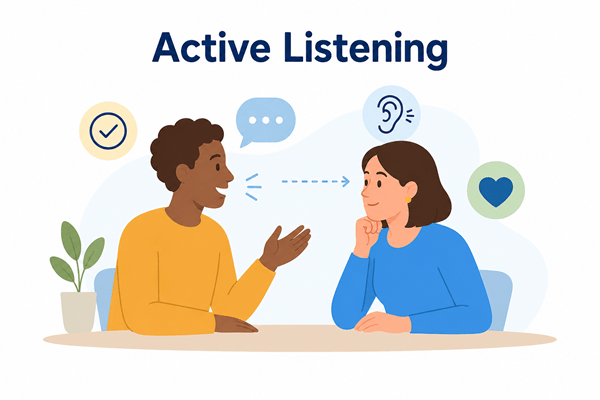
Active listening refers to the act of not only hearing the words spoken by an individual but also consciously trying to comprehend the message they are being conveyed, as well as responding to that message in a thoughtful manner. In healthcare settings and learning environments, active listening is considered highly beneficial as effective communication is necessary because of the need for clarity, empathy, and trust between teachers, students, and patients. The promptness and attentiveness involved in active listening transform the way individuals interact with one another, develop stronger relationships, improve the likelihood of positive outcomes, and create environments where both parties feel respected and understood.
What is Active Listening?
Active listening involves a conscious and structured process of communication, in which the listener must become engaged cognitively, emotionally, and behaviorally with what the speaker intends to communicate. There are many aspects involved with active listening, including sustained engagement, appropriate interpretation, and acknowledging how one will respond to the message. The presence of all such aspects ensures that what a person means to say is clearly understood by the person to whom they directed the communication.
The primary elements of active listening include:
- Undivided attention to the intent and foundations of conversation.
- Providing feedback showing a demonstration of understanding.
- Empathetic engagement with the communicator.
- Asking relevant questions to understand the intent of communication.
The Role of Active Listening in Education
Education forms an important part of building the leaders of tomorrow through more than merely providing information. Education is about fostering dialogue, interpreting information, and building upon shared understanding. As educators adopt active listening techniques with students, a culture of inclusion is created in which students feel their voices are valued, and they are encouraged to express themselves. Through active and effective communication, many aspects of each student's life can be positively impacted, as discussed below:
- Enhances Student Engagement: When teachers actively pay attention to students' needs, they create a respectful and inclusive environment for learning and enrichment. This gives students the courage to share their ideas with confidence, ask stimulating questions, and take part in the learning process.
- Creates Trust and Confidence: Establishing a sense of trust and confidence between the student and teacher is highly essential for a budding and enriching learning environment. When a student feels comfortable communicating their personal problems, it leads to a better relationship between the teacher and student, thus creating a safe and caring academic environment.
- Better Educational Performance: A learning curriculum is not a strait-jacket formula. It shall be suited to the individual needs of the students by acknowledging the errors in students' thinking patterns and methods of learning. Listening to the perspective of students allows the teacher to work in an individualized direction that enhances the students' understanding and retention of the material.
- Fosters Critical Thinking: Students are motivated to critically analyse a situation, discuss the depths of it, and explore creative ideas together when they are listened to and responded to in an engaging manner. Active listening creates a sense of security and safety in the student's mind.
- Students Emotional & Social Development: Listening to a student allows the teacher to identify an emotional or behavioural problem in the early stages of a child's life so that assistance and counselling can be given on time.
The Role of Active Listening in Healthcare
Communication is an essential part of the healthcare process to accurately diagnose, treat patients, and provide care with compassion. Active listening is an important clinical skill for healthcare providers that aids in understanding a patient's symptoms, concerns, and experiences, extending beyond simply observing what is happening.
- Creates a Secure Environment for Patients: When patients are exposed to compassionate and active listening from healthcare professionals, a strong sense of security is developed. Moreover, patients will be more likely to cooperate with the treatment because they feel validated and heard by their caregiver.
- Higher Possibility of Accurate Diagnoses: Highly attentive listening allows healthcare providers to receive a thorough medical history of the patient and gather detailed data relating to presenting symptoms and patient concerns. As a result of the same, they will create accurate diagnoses and provide healthcare that is suitable for the patient's unique needs.
- Increased Patient Satisfaction: Patients who feel heard by their caregivers will have higher satisfaction levels with their healthcare experience and will be more compliant with recommendations made by their healthcare provider.
- Reduced Medical Errors: Miscommunication can lead to medical errors. Active listening allows healthcare providers to clarify their communication with patients, thereby reducing miscommunication and minimising the risk of harm to patients.
- Encourages Compassionate Care: Compassion through active listening provides a human component to patient care. When patients experience compassion from their healthcare provider, they will feel less like a diagnosis or case in a medical record and more like a human being with individual needs and distinct life experiences.
Enroll Today at DPMI and start your journey towards patient & student-focused care
Delhi Paramedical & Management Institute (DPMI) is committed to develop the communication skills of future professionals. Educational courses at DPMI combine academic and practical experience to prepare students with the necessary interpersonal skills to function effectively in the real-life context of education and healthcare. Enroll today at DPMI to build your career upon a foundation of empathy, professionalism, and excellence!