










Pediatric Radiation Safety: Special Considerations for Protecting Children

August 02, 2026
Importance of Mammography in Early Breast Cancer Detection
One variant of cancer that affects more women than any other in the world is breast cancer. Early detection of this disease is essential to improve the chances of successful treatment as well as to increase the chances of survival after being diagnosed with breast cancer. Therefore, it is important to use the most effective screening techniques to identify cancers at an early enough stage where successful treatment may still be possible. Mammography is one such effective screening method that is used to detect breast cancer at an early enough stage to help reduce the number of women who die from breast cancer and to provide them with less invasive treatment options by helping to identify abnormalities before there are any symptoms.
What is Mammography?
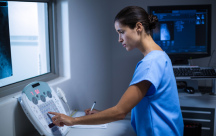
Mammography is a highly specialized type of diagnostic imaging that uses low-dose X-ray technology to evaluate the structure of breast tissue for pathological changes in the tissue. Mammography is especially useful for detecting early signs of breast cancer, such as masses, lesion fibroids, and microcalcifications, even in cases where those abnormalities are not detected during a self breast examination.
There are two main types of mammography, i.e., screening mammograms, which are performed on women who have no signs or symptoms of breast cancer, and diagnostic mammograms, which are performed on women suspected of having breast cancer based on their clinical symptoms or as a follow-up to findings from a routine screening mammogram. The dual use of mammography for both screening purposes and diagnostic evaluations highlights its importance in breast cancer prevention as well as in the diagnostic evaluation of women with breast cancer.
Role of Mammography in Early Detection
Mammography detects breast cancer at an earlier stage. This allows for many treatment options such as ductography and localization etc. Early detection can help women to deal with multiple issues that might arise after an elongated period.
- Reduction of Mortality Rate: A large number of studies show that mammogram screening significantly reduces the number of women who die from breast cancer. Early diagnosis allows women to receive prompt treatment that will prevent of the cancer from becoming advanced and survival rate is 90%, In general women who are diagnosed with breast cancer by routine screening have better outcomes than women whose breast cancer was diagnosed after its development the survival rate is of 20 -40%.
- Finding Abnormalities Before Symptoms Appear: Mammography can often find abnormal breast tissue before there are symptoms or before a woman can feel a breast mass. This helps ensure the earliest possible diagnosis and quality treatment.
- Recognising Microcalcifications: Mammography is highly useful in identifying microcalcifications and very small lesions that may indicate an early stage of cancerous growth that cannot be found through a self examination.
- Facilitating Less Invasive Treatment Options: If breast cancer is detected at its early stages of growth, patients can access more varied forms of therapy, including surgeries and IBRT that can help preserve the breast in early stages.
- Decreasing Progression of the Disease: Mammographic examinations result in decreasing the chances of a cancer progressing into later stages by being able to identify it before it progresses into later stages. When a cancer can progress into later stages of development, there is a greater risk of the patient developing health complications and having an overall adverse clinical outcome due to having a longer period of time introducing the disease to an individual's body.
Conclusion
Mammography is still the most significant single examination used for the prevention or obtaining an early diagnosis of breast cancer. Being able to identify a preclinical state will always result in an improvement in treatment from all aspects and thus decreases the potential for mortality caused by the disease. As technology is significantly increasing the quality and reliability of imaging as well as improving the ability to perform a diagnostic examination regularly and develop a comprehensive approach to managing one’s health, we cannot stress enough how important it is to have regular screenings and be aware of one’s health.
DPMI vocational institute continues to be an important educational institute, bridging the gap connecting education with the actual implementation of skills into the workforce, as demand is increasing for skilled professionals working in all areas of diagnostic imaging. Specialized programs being offered by DPMI will provide individuals with the knowledge necessary for them to play an effective role in the development of skills that would enable them to contribute to the process of early diagnosis of individuals and provide necessary care to those patients. Start your journey towards being a healthcare provider today.