














Role of Emotional Intelligence in Leadership Communication Today

May 18, 2026
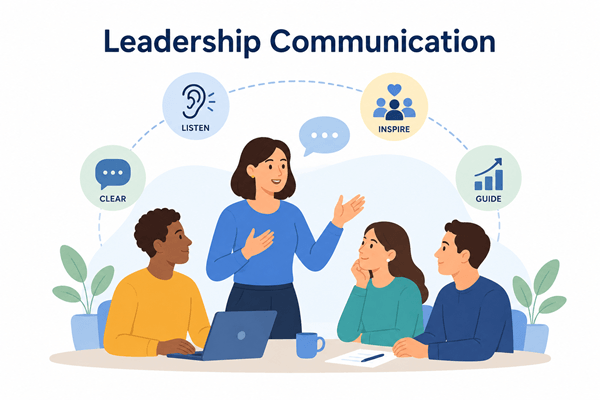
Role of Emotional Intelligence in Leadership Communication Today
Today, in business, leadership is more than just doing a job or being in charge; it is about how you can communicate and build relationships with others. Some experts agree that one of the most significant factors in determining business success is how well leaders communicate with employees and team members. Communication skills of leaders affect not only how well people perform on teams, but also how engaged employees are in their workplaces and the overall culture of an organization.
Emotional Intelligence (EI) is at the heart of this competency, the ability to be aware of, understand and manage your own feelings while also dealing with the feelings of others. Along with personality development, that helps develop personal characteristics such as being able to trust yourself, being flexible and being able to relate well to others, EI is one of the foundational elements for becoming a great leader. When you combine this knowledge with our understanding of how these components work together, we gain a better understanding of the way people lead today, and we discover that effective leadership in today's environment requires not only strong strategic thinking and decision-making skills but also strong emotional awareness and social skills.
Emotional Intelligence in Leadership
Emotional intelligence (EI) is defined as the ability to understand, regulate and respond to emotions in oneself and others. EI has five major components, according to Daniel Goleman's model of emotional intelligence, i.e., Self Awareness, Self-Management, Motivation, Empathy (or Emotional Drifting), and Social Skills. For leaders, these five components represent how effective leaders communicate:
- Self-awareness gives leaders insight into their communication style in relation to their colleagues and stakeholders.
- Self-regulation allows leaders to control their feelings, thoughts and behaviours towards those they lead. Leaders control their emotions which makes it easy to think through issues and communicate well in high-stress situations.
- Empathy enables leaders to understand what is going on in the mind of their team members, therefore creating trust, rapport and a sense of safety in their teams.
- Social Skills allow leaders to work, resolve conflicts, negotiate and build relationships with their teams to achieve results as a cohesive group.
Integrating these competencies into day-to-day communication allows leaders to consistently provide clear and accurate information and motivate their team to be loyal and confident while achieving results. Emotional Intelligence turns routine communication into an effective leadership mechanism for success.
Personality Development as the Basis for Effective Communication
Emotional intelligence is the essential emotional and relational framework for being a leader. Personality development complements this framework by shaping how a leader presents himself, articulates ideas, and engages with stakeholders. In particular, personality development focuses on developing traits such as self-confidence, adaptability, resilience, and critical thinking.
These traits, when combined with emotional intelligence, enable leaders to communicate assertively while empathizing with their audience, strategically tailor messages to multiple audiences without losing authenticity, and create a positive personal brand that reinforces credibility. For example, when a leader approaches a difficult feedback session with confidence, self-awareness, and empathy, they can encourage and motivate their team members rather than cause disengagement.
Likewise, when leaders develop their emotional intelligence, they are able to recognize the underlying concerns of their teams and adapt their communication methods appropriately. The combination of personality development and emotional intelligence creates a leadership communication style that is both effective and relationally-based (based on relations).
Conclusion
To conclude, effective leadership communication is an important part of today's competitive workplace; therefore, incorporating emotional intelligence with personality development provides the best means for leaders to be able to communicate in an effective manner. A leader who has developed his ability to be self-aware, empathetic, socially skilled, and has developed confidence, adaptability and resilience will be able to connect with his team members better than a leader who does not have those traits. The leader will also have the ability to inspire team members to be engaged and to work toward achieving the goals of the organization. The concept of effective leadership communication is not only about simply conveying information, but also about being able to understand, influence and create an emotional connection with and/or between the people within an organization.
For people wanting to grow their leadership capabilities, DPMI provides quality programs in both personality development and leadership communication that give professionals the tools needed to lead with confidence and emotional intelligence. By investing in these types of programs, people can not only grow personally and professionally, but also be able to communicate effectively, influence others positively and achieve measurable results for their organization.