







Nursing Implications in Phototherapy: Roles, Responsibilities & Best Practices

October 07, 2026
Nursing Implications in Phototherapy
Phototherapy plays a significant role in modern medicine, as many medical specialties utilize it for its efficiency and non-invasive procedures. Although there are numerous innovations in medicine, phototherapy remains one of the best solutions for the treatment of many conditions and diseases. However, it should be noted that, like any other medical treatment, the results of phototherapy depend on several factors, such as medical technology and how the procedure is being conducted.
In practice, phototherapy is primarily associated with the assessment and treatment of neonatal hyperbilirubinemia (jaundice), which requires constant observation and prompt intervention. This is where nurses come forward and help in monitoring patient of Neonatal jaundice.
What is Phototherapy?
Phototherapy is an established medical technique commonly used in medicine, most usually in the field of newborn medicine, specifically in the treatment of hyperbilirubinemia. Specifically, phototherapy refers to the administration of light of a particular wavelength that facilitates the breakdown of excess bilirubin into a form that can be disposed of from the body.
Phototherapy is a type of treatment that does not involve surgery and includes the use of blue or blue-green light to treat newborns with high bilirubin levels. Through the application of the light, unconjugated bilirubin present in the skin is turned into water-soluble isomers, which the body can eliminate through urine and stool without the involvement of the liver.
Nursing Implications in Phototherapy
In order for phototherapy to be efficient, a nurse should not just place a child under a phototherapy apparatus. Apart from this, the nurse also needs to monitor the condition of the newborn and make sure that the procedure is effective, while avoiding possible complications.
The responsibilities of nurses include proper administration of light therapy, making sure that the child's eyes are protected from light exposure, and conducting the assessment of the newborn's condition. Their endless effort makes treatment successful and efficient.
- Comprehensive Pre-Treatment Assessment
In advance of the procedure, nurses who will be performing phototherapy should assess the state of the newborn. They need to find out bilirubin levels, gestational age, birth weight, feeding habits, as well as observe the color of the skin and check vital signs of the newborn.
- Proper Positioning of the Infant
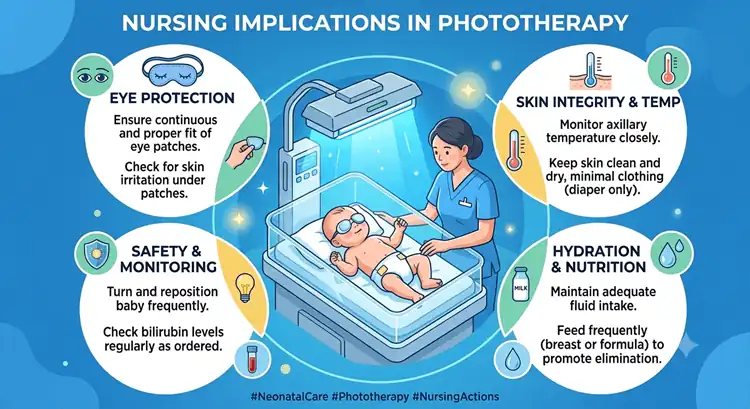
Proper positioning of the baby plays a crucial role in enhancing the effectiveness of the treatment from the therapy lights. The baby’s position, as per hospital requirements, must be adjusted frequently to provide sufficient exposure to the therapeutic light.The baby should be dressed in a diaper and does not need any other clothing except when otherwise specified, while the procedure of therapy is being performed.
- Eye Protectio
One of the responsibilities of a nurse while performing phototherapy on a baby is to ensure the safety of the baby’s eyes. Eye protection must be made before starting the therapy session to avoid possible damage. Nurses should always take eye protection out when feeding the baby or allowing parents to interact with the infant to facilitate bonding with the baby and simultaneously observe the eyes for any signs of irritation.
- Monitoring Body Temperature
Phototherapy can alter the baby’s body temperature and may lead to hyperthermia or hypothermia, depending on the conditions in which the baby is treated. Nurses must monitor the temperature regularly so that it does not go out of the normal range. Maintaining thermal stability is important in the case of premature or low-weight babies.
- Maintaining Adequate Hydration
Phototherapy leads to a rise in insensible water loss in infants via their skin, making it possible for infants to get dehydrated easily. Nurses are required to monitor the intake of fluids, waste, feeding, and even dehydration symptoms. Breastfeeding and/or formula feeding should be recommended at intervals, and if needed, intravenous fluids should be administered.
Best Practices for Safe Phototherapy
To provide safe and effective therapy, nurses should do the following.
- Confirm the doctor’s orders before beginning therapy
- Make sure their distance from the light source is appropriate
- Regularly check how the equipment works
- Encourage the infant to eat appropriately
- Protect the infant’s eyes throughout the treatment
- Move the infant at regular intervals
- Make constant checks of their condition
- Inform the rest of the medical team if they notice something is wrong
This procedure should be successfully conducted with proper adherence as precautionary measures for patient safety issues.
Conclusion
Nursing is the key to success in the case of phototherapy, which involves careful assessment of the patient, careful fear of his condition, family education, and record-keeping. The skills of the nurse are essential when it comes to preventing complications, speeding up recovery, and taking care of the patient's welfare in general.
As the healthcare sector evolves and implements more advanced methods, the role of nurses is considered to be more than just providing technical assistance. Nurses combine their clinical skills with constant supervision and communication skills, contributing to the success of phototherapy.
Build a Rewarding Career in Nursing with DPMI school of Nursing
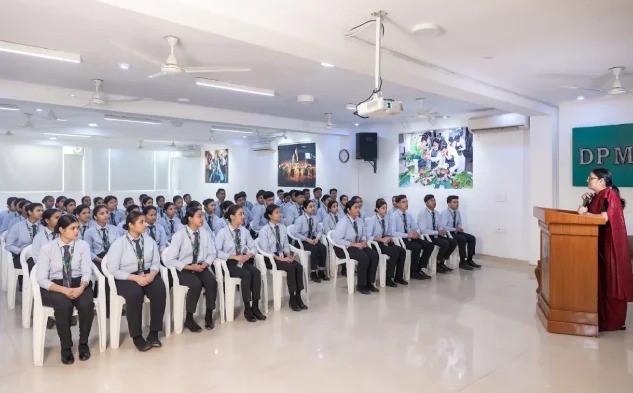
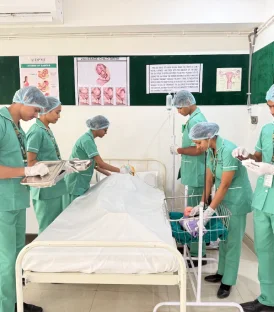
A successful healthcare career for the youth can be established by choosing the perfect institution to pursue a GNM or ANM course. At the DPMI School of Nursing, students get hands-on experience and build confidence by working directly in hospital and clinical settings. The lab training helps students build practical knowledge, and the faculty helps with gaining theoretical learning. The labs have all the latest equipment, so one gains the opportunity to learn how things actually work in modern surgery. Enroll today to gain the best learning experience.