












Hospitality Career Growth: How Tier-2 City Students Are Becoming Hotel GMs

August 19, 2026
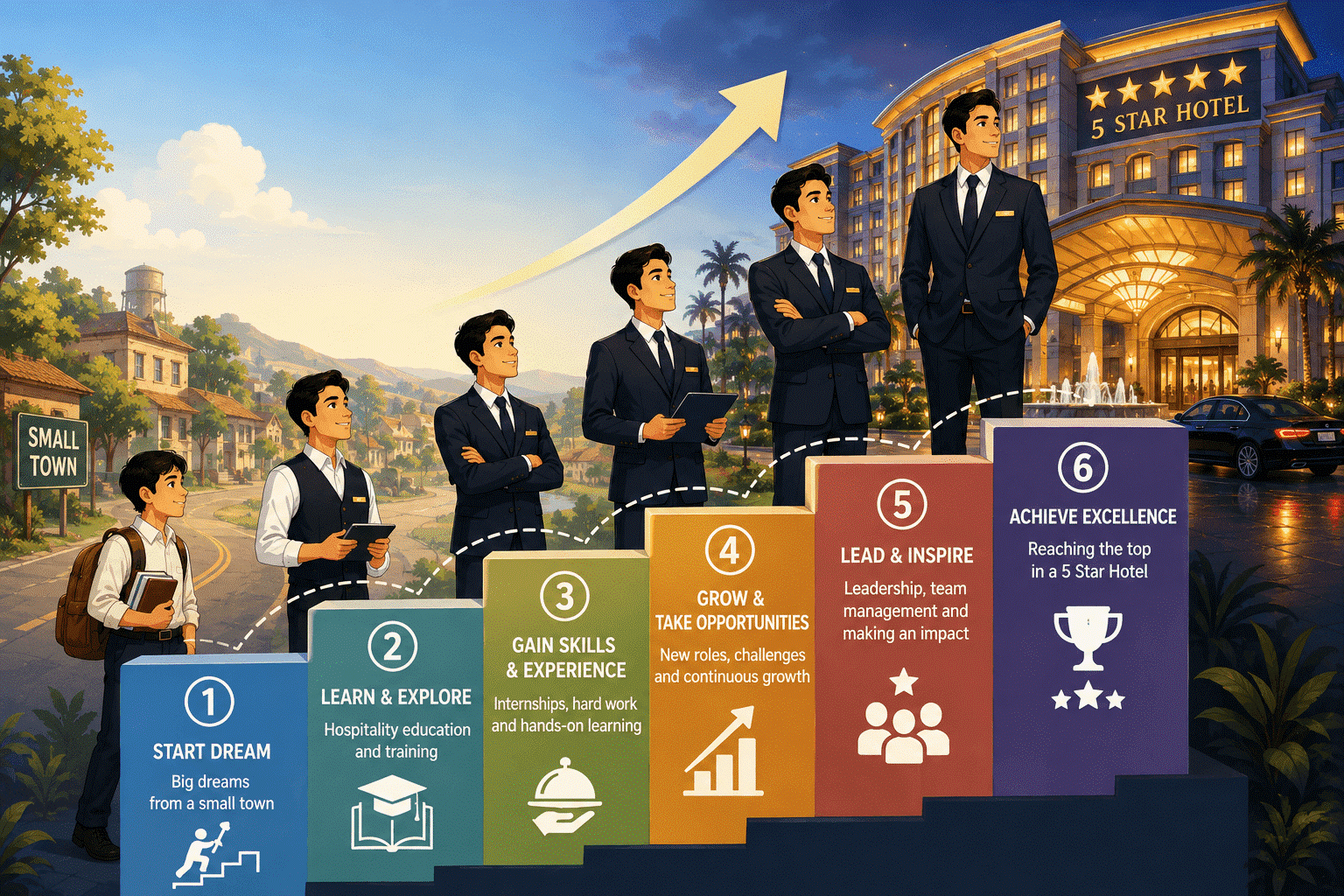
From small town to 5 Star Hotel: career growths in Hospitality
The Indian hospitality industry has undergone considerable change over the past decade, with a very quick rate of change. With the increase in tourism, increased domestic travel, increased luxury hotel chains opening in new areas of the world, and an increasing number of graduates and professionals pursuing careers in hospitality-related industries, there are also more jobs than ever before. The most notable change in the industry has been the growth of individuals from tier 2 and tier 3 cities being able to attain leadership roles in some of India’s top hotels.
Historically, it was thought that only graduates from metropolitan areas could hold senior management positions, but the industry now places much more emphasis on a meritocratic approach. Instead of educational credentials being relied upon as indicators of job performance or career advancement, today’s employers focus on whether an individual possesses attributes such as performance, adaptability, leadership, and service excellence.
As a result of these changes, the term “₹0 to GM Pipeline” has emerged to describe how individuals who come from little to no financial means and have no contact with others within the industry can make their way through the ranks of an organisation or business while developing their skills, gaining valuable industry experience, and consistently proving themselves to be high-performance employees.
The Merit-Based Nature of Hospitality Careers
In contrast to most other professions, where networking or educational background may play an increasingly significant role in moving up the career ladder, the importance of operational expertise and professional behavior in the hospitality industry cannot be overstated. All interactions with guests are crucial to the overall reputation of the hotel, which makes performance the key metric for mobility within the industry.
Most managers in hotels began their careers in entry-level positions, such as at the front desk, in housekeeping, as servers or cooks, etc. These jobs provide an introduction to every aspect of hotel operations while allowing managers to build the fundamental skills required to deal with guests effectively, communicate well, solve problems quickly, and collaborate well with team members.
Why Students from Tier-2 Cities Are Excelling?
Students from tier 2 cities have a strong mindset and own the capabilities to excel in the field of hospitality management as they demonstrate exceptional resilience by overcoming multiple constraints, i.e., financial, educational, etc. They grow up in community-oriented environments, which inculcate a sense of cultural sensitivity amongst them.
Below stated are certain strong reasons as to why the rate of excelling of tier-2 cities’ students is higher than that of others.
- Strong Service Orientation
Students from Tier 2 cities often come from environments where hospitality, respect, and creating long-term relationships are valued. Therefore, they have the natural predisposition to meet the expectations of guests across the board and will continue to provide excellent guest experiences. - High Level of Motivation and Dedication
Most students see hospitality as a means of making a living, building their careers, and improving their financial situation. This very reason is what drives them to work hard, to be eager to learn, and ultimately to be committed to their careers. - Ability to Adapt and Be Resilient
Many students come from smaller communities to work in the hospitality industry in fast-paced environments. Flexibility and perseverance are both necessary characteristics to succeed in the transition. Resilience is a trait that is highly respected and sought after in the hospitality operations environment. - Enhanced Availability of Professional Training and Education
Through better infrastructure for education, partnerships with industry, and internships, students in Tier-2 cities now have the same hands-on and professional training as their peers in metropolitan areas. - Connecting with a Variety of Guest Profiles
Tier-2 city graduates who have had exposure to various cultures and have strong communication skills are better able to interact with local and international guests. This has enhanced the overall experience of the guest and has provided these Tier-2 graduates with opportunities for future leadership roles.
The Role of Hospitality Education: Conclusion
A good hotel management programme forms a bridge between school and employment by providing students with the essential skills needed to be successful in the hospitality industry. In addition to theory-based classroom education, a quality hotel management programme provides students with practical training at the school’s facilities, training for communication skill development, building of career confidence, personal grooming, internships, and partnerships with current hospitality industry leaders.
The Zero-to-GM Pipeline is not just about one group of individuals moving up in their careers, but it is also about the increasing number of available leadership positions within the hospitality industry. For hotel management students, especially those coming from small towns, becoming a general manager is not just a dream, and it is now a realistic goal due to their education and hands-on experience in the hospitality sector.
Start Your Hospitality Journey with DPMI School of Hotel Management
DPMI School of Hotel Management is one of the best hotel management institutes in Delhi NCR, and it provides all the facilities for the students, which are essential for industrial exposure and professional skill development programs. The modern state-of-the-art infrastructure at the institute includes facilities such as hospitality labs, training kitchens, classrooms, practical workshops, internships, and placement support.
Join DPMI School of Hotel Management Today for a Successful Future Ahead!