












Waste Management Strategies for Urban Areas

May 11, 2026
Waste Management Strategies for Urban Areas
The rapid growth of cities, along with economic growth, is increasing the amount and complexity of waste generated by cities worldwide. The growing urban population, the increasing variety and quantity of goods consumed in our daily lives, places an increasing strain on existing municipal waste management systems. As a result, effective waste management has emerged as a major issue for municipal leaders and policymakers. The improper handling of urban waste creates a negative impact on the environment, creates public health hazards and damages urban ecosystems.
Urban waste management consists of many aspects, including Identification of the source of generated waste and controlling its generation, waste segregation, waste collection, waste transport, waste processing, and final disposal. Effective waste management systems are critical for promoting sustainability and conserving resources while ensuring public health and sanitation are prioritized. The increased emphasis placed on integrated and technology-driven waste management approaches will allow urban areas to adopt waste reduction, resource recovery, and environmentally sound waste disposal as a part of their sustainability objectives to achieve a more resilient future. This blog will discuss urban waste management strategies and the importance of these strategies in achieving sustainable urban development and resiliency.
Meaning of Urban Waste
Urban waste consists mainly of municipal solid waste produced by Residencial areas, commercial establishments along with public places. The components of urban waste include food or organic waste, plastics, paper and specialized types of waste streams, such as e-waste, biohazardous waste,construction and demolition debris. Additional factors influencing the quantity and types of urban waste generated include the evolution in how society consumes products, advancements in technology and the rapid expansion of infrastructure in urban locations.
Ineffective handling processes of urban waste, including improper segregation and disposal of waste in the environment, creates a negative impact on both the environmental and public health by causing increased levels of air, water and land pollution. The atmosphere is contaminated from the release of toxic substances and greenhouse gases resulting from the open dumping and burning of urban waste. Thus, it impacts climate change and has become leading cause for respiratory illnesses in urban areas. An integrated waste management approach, including but not limited to waste reduction, segregation, recycling, treatment, and environmentally safe disposal, is needed to achieve the most efficient urban waste management maximize resource opportunities for sustainable urban development.
Key Waste Management Strategies for Urban Areas
To encourage effective strategies for landfill removal, we can use several methods, all of which have the same general characteristics but are often employed concurrently in conjunction with different locations and municipal authorities. Some of the strategies followed regularly are:
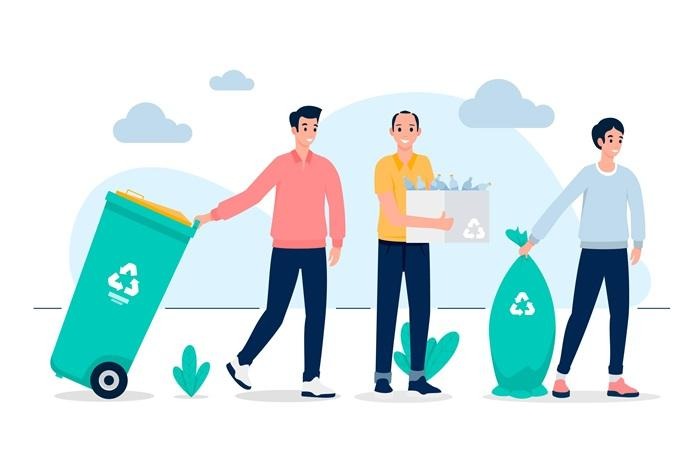
- Waste Disposal at the Point of Generation: The first part of an overall integrated Waste Management System involves segregating waste by type from each source. Moreover, each household should be encouraged to place their waste into one of four types, i.e., biodegradable, non-biodegradable, recyclable, and hazardous. Waste that is segregated in this manner alleviates pressure on landfills, enhances the overall recycling process, and makes it easier for waste generators to safely dispose of waste materials.
- Waste Minimization: Minimizing waste generation is one of the three primary objectives designed to address environmental issues through responsible consumption patterns, reclaiming materials that were taken out of circulation, and eliminating the need for single-use plastic bags. Public awareness campaigns and public policies focused on environmentally sustainable lifestyles can significantly improve waste minimization.
- Recycling & Resource Recovery: Recycling helps to recover valuable commodities such as paper, plastic, metals, etc. Given the growing demand for energy-efficient products, many urban households utilize energy-efficient packaging, as well as energy-efficient products, which minimizes material usage during both the production and packaging stages. In conjunction with recycling infrastructure and public participation from both the private sector and citizens alike, recycling reduces the loss of natural resources through less environmental degradation.
- Composting and Organic Waste Management: Urban waste contains significant amounts of compostable materials. Composting organic waste produces compost and biomethane. The process of composting supports the development of carbon-neutral energy sources for urban agriculture and reduces dependence on landfill disposal of waste.
- Scientific Landfilling: Landfills need to have a science-based approach to landfill design and management. A sanitary landfill is a landfill that uses a leachate management system, i.e., a leachate collection basin and a system for recovering and treating the leachate, to minimize harm to the environment and the population.
Conclusion
To effectively manage urban waste, both new infrastructure and a supportive policy framework will be required, as well as a workforce that is well versed in environmental law, sustainable practices, and urban governance. In this environment, (DPMI) is a key contributor through its practice of providing career-focused training and education in Environmental Management, Public Health, and Urban Sustainability.
Future professionals interested in pursuing careers in Allied Health & paramedical sciences or Nursing should join DPMI, located in Delhi NCR, to obtain knowledge, hands-on training, and professional competency necessary to effectively meet the challenges of waste management and environmental sustainability.