












White Coats, Black Suits & Big Dreams | Life of an HM Student | DPMI

May 01, 2026

White Coats, Black Suits & Big Dreams: Life of an HM Student
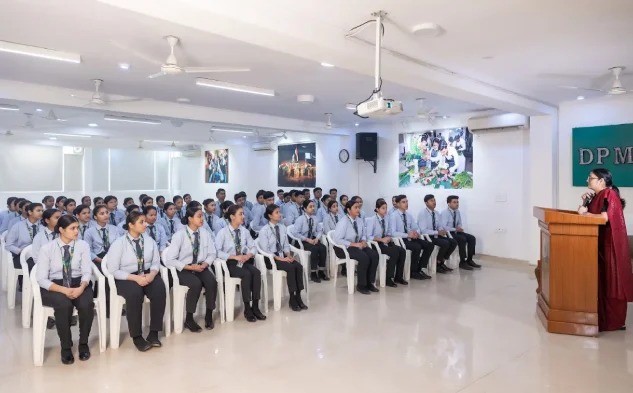
Hospitality Management education is built on three interconnected pillars: the professional environment, the technical environment, and the experiential environment. Unlike many traditional academic programs, HM education strongly emphasizes experiential learning. This approach ensures that students are shaped not only through classroom instruction but also through practical exposure and professional presentation. Their identity evolves alongside their skills—symbolized by the uniforms they wear: white coats for operational precision and black suits for managerial presence.
The journey of a hospitality management student extends far beyond lectures and examinations. It is a path defined by discipline, adaptability, and the development of service-oriented leadership. Through intensive hands-on training, structured internships, and constant interaction with real guests, students acquire the knowledge, confidence, and practical skills required to navigate the complexities of the global hospitality industry.
The White Coat in the HM Profession
The white coat represents far more than a uniform in hospitality education—it symbolizes performance, responsibility, and professionalism. Commonly associated with culinary and food production areas, it reflects the foundational values of hospitality operations: precision, hygiene, discipline, and accountability.
Wearing the white coat marks a transition from theoretical learning to structured, hands-on practice that mirrors real industry environments. It trains students to internalize professional standards early in their careers.
Strict guidelines govern the use of the white coat because its colour highlights the industry’s uncompromising commitment to cleanliness, food safety, and personal hygiene. HM students are trained under globally recognized sanitation and operational protocols, ensuring consistency in how food is prepared, presented, and served.
The Black Suit in the HM Profession
If the white coat represents operational excellence, the black suit signifies leadership and guest engagement. It reflects the shift from technical training to professional responsibility—where interaction, communication, and decision-making take center stage.
The black suit is typically worn in roles such as front office operations, restaurants, events, sales, human resources, and administration. These areas demand not only technical expertise but also emotional intelligence and strong interpersonal skills, especially in dynamic and high-pressure environments.
Hospitality education therefore places great emphasis on grooming, professional etiquette, conflict resolution, and service recovery strategies. After all, a guest’s perception of an organization is shaped more by human interaction than by procedures or policies.
Beyond appearance, the black suit represents leadership. Students learn to apply concepts such as brand positioning, service quality management, and revenue-driven decision-making. Through simulations, role-plays, and internships, they bridge the gap between theory and practice, gaining confidence in real-world scenarios.
Big Dreams and Global Opportunities
Hospitality is inherently global, and HM education reflects this international outlook. Students are prepared not just for local careers but for opportunities that span cultures, countries, and industries.
Because hospitality skills are highly transferable, graduates often enjoy greater career flexibility than those in many other fields. They can pursue paths across geographic boundaries and professional sectors.
Career opportunities extend far beyond hotels and resorts to include fine dining, airlines, cruise lines, event management, luxury retail, healthcare hospitality, and entrepreneurship. HM curricula are designed to align with international industry standards, ensuring that graduates are ready to compete and succeed worldwide.
Conclusion
Hospitality management education is driven by structured training, professional discipline, and the aspiration for meaningful careers. The journey begins with the white coat, symbolizing dedication to operational excellence, and progresses to the black suit, representing responsibility, leadership, and direction.
Together, these experiences shape individuals who are technically skilled, adaptable to diverse environments, and capable of leading with confidence and empathy.
As the global economy increasingly values experiences over products, HM education prepares a workforce equipped to thrive anywhere in the world. By pursuing a Hotel Management course in Delhi NCR at a reputed institution, students gain industry-focused knowledge, hands-on training, and professional networks that help them transition seamlessly from academia to successful careers in hospitality—wherever their ambitions take them.