









Importance of Sterilization in CSSD

September 30, 2026
Importance of Sterilization in CSSD
Patient safety in the healthcare industry is a priority that is recognized long before the procedure commences. One of the key components of infection control is the sterilization of instruments or equipment used in the medical world. The responsibility of sterilization lies with the Central Sterile Services Department (CSSD). Their job is to make sure that the devices are cleaned, disinfected, sterilized, and stored effectively before being put to use.
Sterilization in CSSD is critical in relation to infection control, thus protecting both patients and healthcare providers, and sterilization allows for compliance with the requirements of the medical profession as a whole.
What is CSSD?
Central Sterile Services Department (CSSD) is a department of hospitals and healthcare facilities concerned with disinfection, examination, packaging, sterilization, and storage of reusable surgical and medical equipment. It is the major center of the infection control department, making sure that the instruments reaching the operating room, ICU, or outpatient department are sanitized enough for use on patients.
The department abides by the protocols and quality control processes that ensure the equipment is sterilized according to national or international guidelines.
What is Sterilization?
Sterilization is the process that refers to the destruction of all forms of microorganisms present in medical equipment and instruments, including bacteria, viruses, fungi, and extremely resistant bacterial spores. Unlike disinfection, which brings down the levels of harmful microorganisms and makes it possible for instruments to be used in invasive medical procedures, sterilization ensures total elimination of the microbial elements.
The techniques of sterilization include methods such as autoclaving e.g., steam sterilization, ethylene oxide (EO) gas sterilization, and also low-temperature sterilization, which is chosen based on the type and material the device is made of.
Why Sterilization is Important in CSSD?
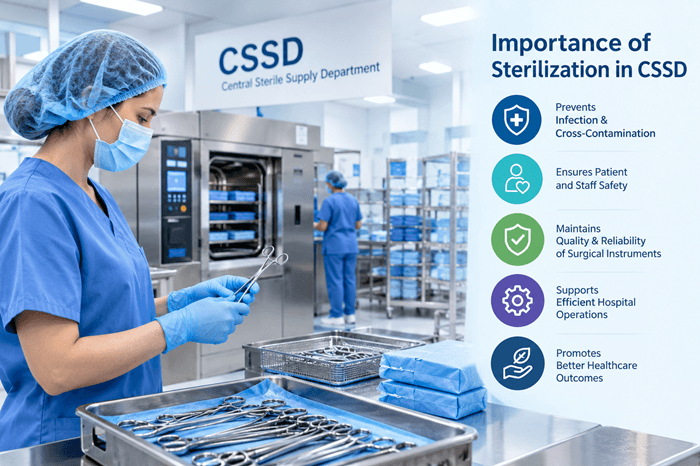
Sterilization is the main principle of the Central Sterile Services Department (CSSD) and is considered basic for the patient’s safety and effective provision of healthcare services for them. The CSSD carries out sterilization of all reusable instruments to rid them of pathogens before they are used on patients. Overall, sterilization not only stops the spreading of infections but also helps conduct successful surgery, provides protection of healthcare providers, and ensures compliance with infection control requirements. Below are the main reasons why sterilization is important for the functioning of the CSSD.
-
Prevents Healthcare-Associated Infections (HAIs)
One of the most important aims of sterilization is to stop the spread of infections among patients through contaminated surgical instruments entering their bodies with germs present on them. It is known as one of the risk factors leading to postoperative infection and another type of human infection. -
Ensures Patient Safety
Any patient is guaranteed the right to use sanitary and safe medical services. Sterilized tools and equipment can not increase the risk of infections. By having strict rules for sterilization, CSSD helps improve patient safety. - Protects Healthcare Professionals
Sterilization not only protects patients but also medical staff. When sterilization is performed effectively, this helps reduce infectious agents encountered daily by doctors, nurses, and others working in the medical sphere.
-
Prevents Cross-Contamination
In the case of using reusable medical tools, the chance of transferring pathogenic microorganisms from one patient to another increases. That is why CSSD has established widely accepted guidelines for cleaning and sterilization of tools. -
Supports Successful Surgical Outcomes
Surgical instruments are vital for successful surgical outcomes. Even minor contaminants can lead to surgical site infections, and that may cause delayed healing, increased hospitalization, or additional surgical intervention. Therefore, ensuring proper sterilization of surgical devices is vital for the safety of patients and thus leads to better outcomes.
Challenges in Maintaining Effective Sterilization
Despite advances in medical equipment, CSSD has to deal with many bottlenecks. These include high volumes of patients, increasing numbers of complex surgical procedures, low numbers of skilled workers, maintenance efforts, and processing of fragile instruments.
Another problem is that sterile instruments can lose their sterility due to bad packaging, bad cleaning before sterilization, incorrect sterilizer loading, or lack of monitoring of the sterilization process. Thus, staff training, compliance with SOPs, preventive maintenance of sterilization equipment, and continuous monitoring of quality are among the key solutions to the abovementioned problems.
Conclusion
Sterilization in the Central Sterile Services Department serves as an important element in ensuring that safe and effective healthcare is provided. Through its work in making sure that all the reusable medical instruments are sanitized and free of dangerous pathogens, the department prevents deadly infections, protects medical staff and patients, and helps achieve successful surgical and medical results. The continuous progress in the field of healthcare highlights the need to follow strict protocols of sterilization and invest in trained employees of the department.
Become a Skilled CSSD Professional with DPMI Vocational Institute
The paramedical and nursing courses at DPMI Vocational Institute are particularly articulated for students who aim to have a stable and long-term career in the medical field. Depending upon the course, it is suitable for 10th, 12th, and college graduates. DPMI Vocational Institute offers diploma courses as well, the tenure of completion of which is 1-2 years. This diploma is perfect for students who see themselves gaining knowledge about industry-focused training in hospitals, companies, and other medical areas.