












The Importance of Lead Aprons and Shielding in Radiation Safety | DPMI

July 21, 2026
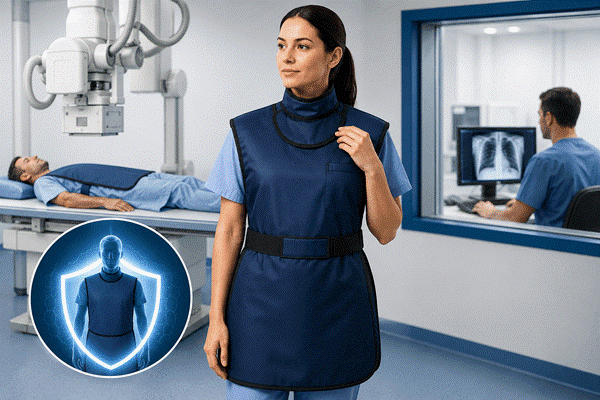
Diagnostic imaging techniques such as X-ray, Mammography, CT Scan and MRI help in an accurate diagnosis and treatment in today's health sector. These diagnostic imaging techniques, while instrumental to modern health, have inherent ionizing radiation, which could, under improper controls, have severe health effects on patients and health workers alike. Safety apparel and especially lead aprons and shields, are therefore critical to the safety of individuals in health institutions.
What is Radiation Protection?
Medical imaging radiation protection is established around a framework in which exposure to ionizing radiation is kept to the minimum possible level whilst simultaneously achieving maximum diagnostically acceptable image quality. This framework hinges on the fundamental principle of ALARA, which dictates that the doses should be "As Low As Reasonably Achievable", thus incorporating factors that affect the exposure levels, such as those related to clinical needs and current technology. It essentially involves three general strategies that ensure benefits far outweigh risks: justification of procedures, optimization of exposure, and dose limitation.
From the technical standpoint of Radiation Protection, controlling both primary and scatter radiation can be achieved using the factors time, distance, and shielding. Controlling exposure time for an adequate image to be obtained, keeping one as far away from the source as possible, and utilizing shielding devices such as lead aprons and wall/structural shielding will decrease the dose absorbed by a large amount. These methods of radiation protection are especially important within the departments of radiology, where doses can be so high and the exposures so frequent that they could lead to detrimental long-term biological effects.
Role of Lead Apron in Radiation Safety
Lead aprons are used to reduce personnel exposure to ionizing radiation within a healthcare facility. They consist of high-density materials that absorb and attenuate scattered radiation, thereby protecting tissues and organs more susceptible to chronic radiation absorption. Below mentioned is the role of lead aprons in Radiation Safety.
- Protection of the Vital Organs: Lead aprons are made specifically to shield vital organs of the body, like reproductive organs, thyroid and abdominal area, from exposure to radiation dose, which may, in the long term, lead to tissue damage or cause radioactive problems. Its absorptive properties protect these organs from being exposed, and this subsequently prevents a variety of long-term ailments that may develop over time due to high exposures.
- Health and Safety of the Health Professionals: It is observed that health care professionals, such as Radiologists and Technicians, are often exposed to radiation during the imaging process. The use of lead aprons at regular intervals can minimize occupational dose and also ensure adherence to radiation safety standards required within these facilities.
- Safety of the Patients: Besides protecting health care professionals, lead aprons are also used on patients, children and pregnant women. This is especially true in protecting the sensitive areas during the imaging procedure.
Importance of Shielding in Radiation Department
Shielding refers to the containment and control of ionizing radiation emitted within the medical environment. The strategic placement of lead-lined walls, barriers and shields allows healthcare facilities to diminish both direct and scattered radiation exposure. The detailed importance of shielding is stated below.
- Structural Shielding: In hospitals and diagnostic health facilities, there are specific structures like walls and the walls of doors and windows constructed in such a way that the radiation produced is contained within the room itself without leaking out. Lead is used as the primary material in construction.
- Equipment-Based Shielding: At times, even the machinery used for imaging has a lead protection attached to it for reducing the intensity of the radiation so that only the necessary amount is allowed to pass for the purposes of diagnosis.
- Control of the Scattered Radiation: The concept of using lead aprons, shields and also constructing walls in the room that have lead plating behind them serves to limit the radiation from scattering throughout the room and outside and to ensure that the exposure received by the patient is limited to an acceptable level.
Conclusion
The people who would like to opt for this lucrative career path can either apply for a Radiology Technician course or a Diploma in Radiology from DPMI, which will provide them with the required theoretical and practical knowledge needed to begin. DPMI has industry-oriented courses that aim to teach you through theory as well as practical application, so that one is best prepared to take up such jobs in present-day scenarios. Choose DPMI for a rewarding and secure future.