












Common Radiographic Positioning Mistakes & How to Avoid Them

May 22, 2026
Common Radiographic Positioning Mistakes and Tips
Radiographic imaging has become an essential part of modern diagnostic medicine. Accurate patient positioning is critical for producing high quality and diagnostically sound images. If the patient is not positioned correctly, even minor errors can occur when reading images, requiring repeat radiographs, increasing radiation exposure to the patient, and compromising the patient's care. Consequently, it is important for the radiographers and radiology professionals to be aware of common positioning errors, as well as their appropriate techniques.
Importance of Accurate Positioning in Radiography
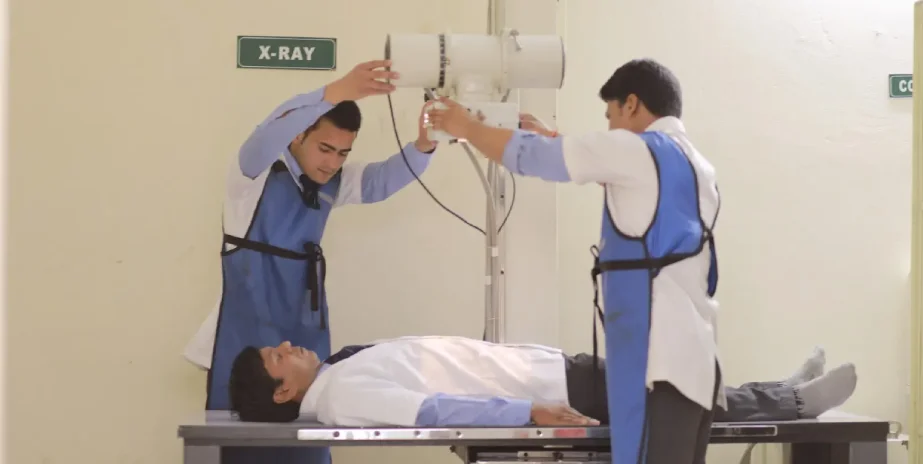
Correct positioning of the patient will allow for the best visualization of anatomical structures and prevent distortion, allowing for best clarity of the image produced. For an image to be produced without any artifacts, superimposition, or incorrect anatomical representation, the patient, x-ray beam, and image receptor should be accurately aligned. In addition to achieving optimal imaging results, the correct positioning of the patient and accurately aligned x-ray beam and image receptors will help to reduce the incidence of repeat images, thereby reducing the patient's unnecessary radiation exposure and increasing the efficiency of the imaging workflow.
Correct patient positioning is important in providing reliable diagnostic images in clinical decision-making. The images produced via X-ray provide the basis for making a diagnosis, planning treatment, and following up, and thus, any positional error would affect an X-ray image's ability to be read correctly or cause a delay in arriving at a final diagnosis. Standardizing appropriate positioning techniques will enable comparisons of serial images, which is critical to monitoring the progression of disease or response to treatment.
Ordinary Radiographic Positioning Mistakes
Although advancements in imaging technology have improved image quality, errors related to patient positioning and limitations on the quality of images produced due to patient position continue to be frequently seen in clinical practice. Errors in patient positioning often arise from one of the following, i.e., insufficient patient cooperation, lack of time, lack of attention to anatomical landmarks, and insufficient adherence to standard procedures for patient positioning.
- Patient Rotation: Rotating patients unintentionally is a common mistake that may distort anatomical structures and result in asymmetrical images. Patient rotation is particularly important when taking chest x-rays or spinal x-rays; even slight amounts of patient rotation may interfere with the diagnosis of the condition presented by the patient.
- Incorrect Centring of the X-ray Beam: If the X-ray beam is improperly centred, the area of interest may be partially or completely excluded from view. This may also produce non uniform exposure, resulting in the loss of potentially vital diagnostic information.
- Misalignment of Body Parts with Image Receptor: Improper alignment of the body part of the patient with respect to the image receptor may produce either elongation or foreshortening of the anatomical structures of interest; this will produce a distortion of the radiographic image.
- Inadequate Immobilization: If the patient moves during the exposure, the resulting image may contain motion blur, making the quality of the image unsatisfactory. Patients who may be especially susceptible to motion are pediatric or geriatric.
- Incorrect Application of Positioning Aids: The use of positioning aids such as supports, sponges, or straps may prevent the patient from being positioned stably, resulting in differing results of the radiographic images.
Tips to Avoid Positioning Errors
To avoid positioning errors while performing radiography, a systematic method shall be adopted to ensure that patients are well-positioned, and the verification of the same can help the radiographers decrease the number of repeat exposures, improve workflow efficiency, and maintain patient safety. A few tips are mentioned below to achieve proper radiography results without any errors.
- Effective Patient Preparation and Communication: Proper communication with the patient is crucial for obtaining cooperation from the patient and minimizing motion during the exposure process. Providing clear explanations regarding procedure, positioning requirements, and the importance of remaining still will improve both film positioning accuracy and film quality.
- Anatomical Landmarks shall be well-positioned: Appropriate alignment and on-point identification of anatomical landmarks are the cornerstones of proper positioning in the radiography process. Thus, providing for the precise centring of the X-ray beam and optimal imaging of the area of interest. Following such a proper procedure minimizes the possibility of an inaccurate diagnosis.
- Alignment Check Before Exposure: Systematic pre-exposure checks on the patient's position, beam's alignment, and receptor must be performed to ensure that any misalignment has been corrected before taking a radiograph. Performing pre-exposure checks will lead to fewer retake images and will reduce the patient's radiation exposure due to improper positioning of either the patient or the X-ray equipment.
- Use of Positioning Aids and Immobilization Devices: Using positioning aids such as sponges, straps, and other immobilization devices can be helpful for patients who have difficulty maintaining proper body position and stability. This will help to create clearer, more consistent images.
Conclusion
There is a continual rise in demand for qualified specialists within the radiographic profession, and the Delhi Paramedical Management Institute (DPMI) plays an important role in providing competent and qualified radiographers by providing them with hands-on training in addition to theoretical knowledge. Start your journey with DPMI today and take your first step towards a successful career in health care by joining a well-educated and experienced workforce that offers quality, reliable and accurate diagnostic services.