













Zero Waste Kitchens: How Hotels and Restaurants Are Reducing Waste

February 12, 2026
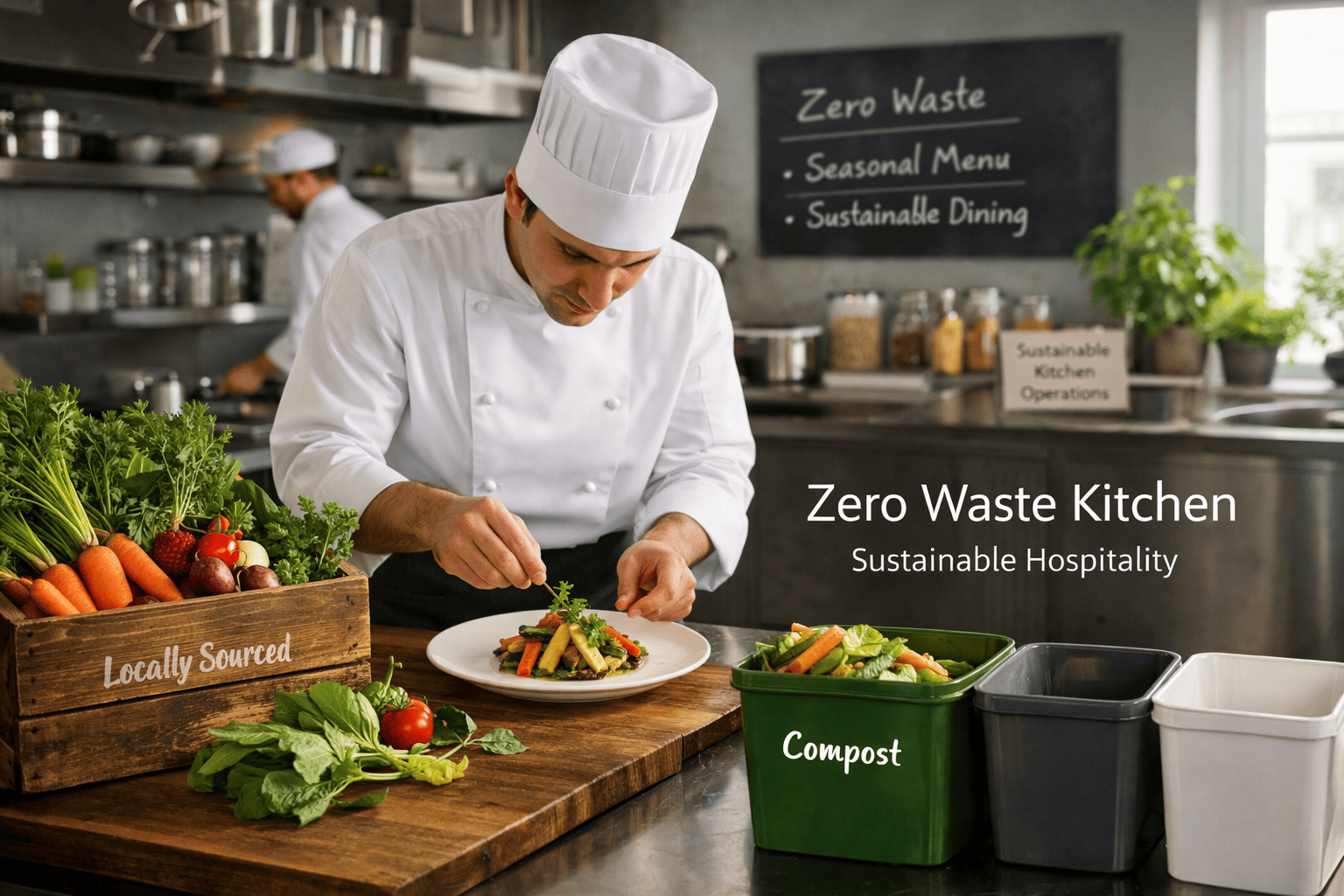
The awareness of the environment around the world is continually increasing. As a result, hotels and restaurants are now facing greater pressure to use environmentally sustainable and resource-efficient practices. One of the most talked about concepts in the hotel and restaurant industry today is the “Zero Waste Kitchen”, an idea designed to reduce food waste and maximize the most efficient use of current resources by using sustainable waste management. Through this blog, we are going to discuss the meaning of “Zero Waste Kitchen” and how hotels and restaurants are implementing traditional practices, using this concept to create a sustainable and less environmentally damaging method of operating efficiently.
What Is a Zero Waste Kitchen?
A zero-waste kitchen is a food service business model committed to sustainability, focusing on minimising the total amount of waste produced throughout the kitchen's operation. The zero-waste kitchen does not view waste as an inevitable by-product of producing food, but instead approaches waste prevention at its origins, through careful planning and planning for no waste, utilizing resources effectively, and operating with a circular operational model.
Every step of the food supply chain in a zero-waste kitchen is carefully assessed, including assessing suppliers’ food products, keeping accurate inventory records, managing supply and demand relationships, preparing and cooking food, and serving and disposing of food. Steps towards achieving a zero-waste kitchen include responsible sourcing and procurement practices, controlled portion sizes of food prepared and served, utilizing every part of the raw food source, composting all organic waste, and recycling all non-organic materials used in the kitchen. Essentially, the zero-waste kitchen model is not only about improving the method of segregating waste but also about the overall operation of the kitchen being more efficient and maximising the amount of resources utilized.
How Does a Zero-Waste Kitchen Make a Difference on Earth?
By adopting the concept of a zero-waste kitchen, the hospitality industry can contribute to minimizing the environmental impact, creating economic and operational efficiencies, and reducing its overall impact on the environment by utilizing and managing its resources correctly. The implementation of a zero-waste kitchen will allow for continuing support of the goals of sustainability and help in the sustainable growth of a restaurant that is environmental friendly and aligned with the growing customer preference for restaurants that are committed to sustainability. Certain concrete differences that the already existing zero-waste kitchens have made, and the ones that the potential ones are aiming to focus on, are mentioned below:
1.Reduced Environmental Impact: The greenhouse gases are emitted on a lower level when the food waste going into the landfills is reduced. Moreover, it leads to a positive impact on the soil and water pollution as well.
2.Increased Cost Savings: The hotels and restaurants can make a better financial decision by focusing on improving inventory management and using ingredients efficiently.
3.Improved Use of Resources: Using innovative cooking methods, portion control, and waste-to-resource solutions such as composting encourages complete use of raw materials.
4.Support of a Circular Economy: The promotion of reuse, recycling, and composting converts waste materials to resources and decreases the need to use new materials.
5.Improved Brand Image & Trust of Guests: Being able to show the dedication to sustainability results in providing eco-friendly experiences to the guests and building customer loyalty.
How Hotels and Restaurants Are Adopting Zero Waste Kitchen Practices
Hospitality establishments such as hotels and restaurants are investing in utilizing a structured, data-driven, and practical approach to reducing food waste within their production and serving processes. The aim of producing less food waste can be achieved by preventing as much waste as possible at its source; improving operational efficiencies; and incorporating sustainability into everyday decisions. Using technology, staff training, and responsible sourcing, the restaurants are evolving from zero-waste philosophies into measurable outcomes. Some of these ways are explained below:
1.Kitchen Waste Audits: Kitchens routinely conduct kitchen-waste audits to help identify areas of inefficiency in their preparation process. For example, kitchen waste audits analyse pre-consumer waste such as food scraps (e.g., vegetable peelings) returned from plates to the kitchen, spoiled ingredients, etc.
2.Nose-To-Tail and Utilization of Whole Ingredients: Making stocks and sauces from the bones and skin of an animal, and garnishing dishes with root vegetables, allows chefs to create new recipes from ingredients which must be considered waste for the hotels and restaurants. Utilising each edible portion of the food ingredient helps to achieve sustainability and gives rise to creative dishes.
3.Precise Portion Control: Using standardized recipes and portion sizes to produce food helps eliminate over-production and allows kitchens to closely match production levels with demand, thus ensuring consistent food quality.
4.Smart Inventory Management and Controlled Storage Systems: Effective management of inventory and careful selection of temperature-controlled storage systems and good forecasting practices help eliminate the potential for spoilage, food expenses, and waste.
5.Design for Waste Reduction: Food and Beverage menus designed to maximize the efficiencies of using a common set of ingredients will reduce the amount of leftover inventory and allow for the maximum efficiency in utilization of the raw ingredients.
Conclusion
The development of zero-waste kitchens is an example of how hotels and restaurants are changing the way they view sustainability, efficiency, and responsible management of resources, as well as how they create less food waste. With fewer food waste being generated at its point of generation through optimisation of kitchen operation and circular economy practices, the hospitality industry can be less wasteful and environmentally damaging, while at the same time providing a more cost-effective and higher-quality service.
Providing students who wish to pursue careers in the Hospitality Industry with an educational experience focused on the industry is very important. DPMI offers a Diploma in Hotel Management, which incorporates all aspects of modern Hotel Management and Hospitality, as well as the implementation of sustainable kitchen operations, along with practical training within the industry.Enrolment into DPMI will help you gain the skills, discipline, and sustainability focus necessary to succeed in today’s emerging Hospitality industry and to be the leader of responsible management of hotels in the future, emerging from the best hotel management institute in India.